
Gaspar de Portola: Spanish Soldier and Nobleman
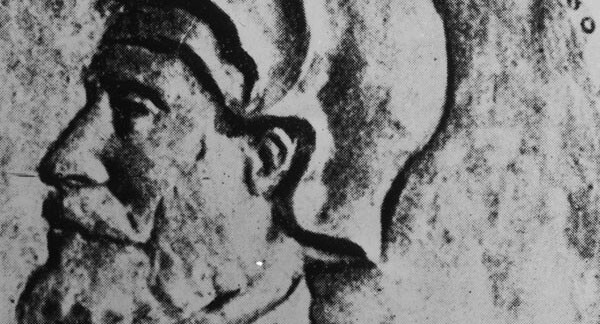
Fear of British encroachment along the Pacific coast of California led the Spanish crown to expand its empire north in the late 1760s, and began colonizing an area previously documented a century and a half earlier by the Spanish explorer Sebastián Vizcaino.
The man chosen for the job was Gaspar de Portolà, a seasoned Spanish soldier and nobleman who had fought for the crown in Italy and Portugal. Portolà planned an ambitious four-part expedition to colonize the area between Monterey and San Diego and establish outposts along the coast. Accompanied by missionaries (including Father Junipero Serra), settlers and a band of what he described in his diaries as "leather-jacket soldiers," Portolà left Baja California on May 15, 1769.
A few months later, on August 2nd, the expedition arrived in Los Angeles where they encountered a band of Tongva Indians - the Hahamog'nas - on the banks of the Arroyo Seco. Portolà noted:
"Three natives were seen and friendly Indians were sent in; they succeeded in getting one who was treated as well as possible, and it was understood from him by signs that his chief had sent him to watch us and that, uniting with other villages, they where going to lie an ambush to kill the father (Serra) and company."
Unharmed by the natives, Portolà and his men proceeded north toward San Francisco but got lost in the thick coastal fog and missed their final destination: Monterey Bay.
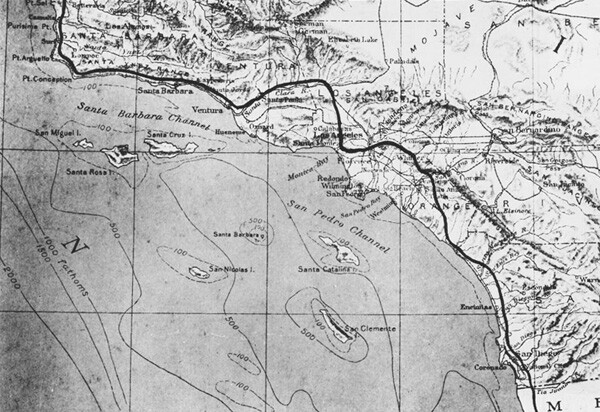
Frustrated and fatigued, they returned to Los Angeles ready to abort their mission. "I call your attention to the fact that we find ourselves today with eleven soldiers sick with scurvy," Portolà wrote, with "provisions reduced to fifty sacks of flour, twelve packs of meat, and four of vegetable." It was then that he met Chief Hahamongvic, who invited him for a smoke at the tip of Millard Canyon. The encounter was peaceful, but a few years later Spanish expansion into California would begin in earnest. Outposts and missions spread the Christian faith across the land, irreparably transforming the native population.
Gaspar de Portolà eventually became Governor of Baja and Alta California, serving between 1767 and 1770.
Cathedral Oak, which served as a makeshift cathedral where Portolà and Father Juan Crespi allegedly held the first Easter service in California, was located along the Arroyo Seco in South Pasadena. Although the tree with Portolà's carved cross no longer exists, a memorial marks the spot at 430 Arroyo Drive.


